From map to app: why the Viewer is now a real app
The old viewer wasn't yet an app on our modern framework. Here we explain why we migrated, what benefits that brings, and what's different now.
The GeoApps Viewer has taken an important step: from a standalone map viewer to a full-fledged app on our modern platform. This article explains why we migrated, what benefits it brings, and what's different now.
Before: the viewer wasn't yet an app
The old viewer was a powerful map viewer, but it didn't yet run on the same modern framework as our other apps (Dashboard, Fieldwork, MapTour, etc.). Technically it was more of a standalone viewer than an integrated app in the GeoApps ecosystem. That had implications for maintenance, consistency, and further development.
Why we migrated
We wanted one modern platform for all GeoApps products: the same technical foundation, the same design, and the same development experience. That lets us innovate faster, fix bugs in one place, and ensure that Viewer, Dashboard, Fieldwork, and the rest of the apps deliver the same quality and UX.
- One codebase and framework for all apps
- Consistent UX and performance everywhere
- Faster releases and better maintainability
What you get: the benefits
Same look & feel as other GeoApps apps
Better performance and faster load times
One security and release model for the entire platform
Access to all modern Viewer features and future extensions
Features of the new Viewer app
As an app on the modern framework, the Viewer now offers:
Interactive maps with smooth navigation and responsive design
Connections to WMS, WMTS, WFS, GeoJSON, Shapefile, GeoPackage and other standards
Advanced analysis and reporting: insights and PDF export
Team-oriented management: roles, permissions, 2FA and Single Sign-On
Easy sharing and embedding; JavaScript API for your own apps
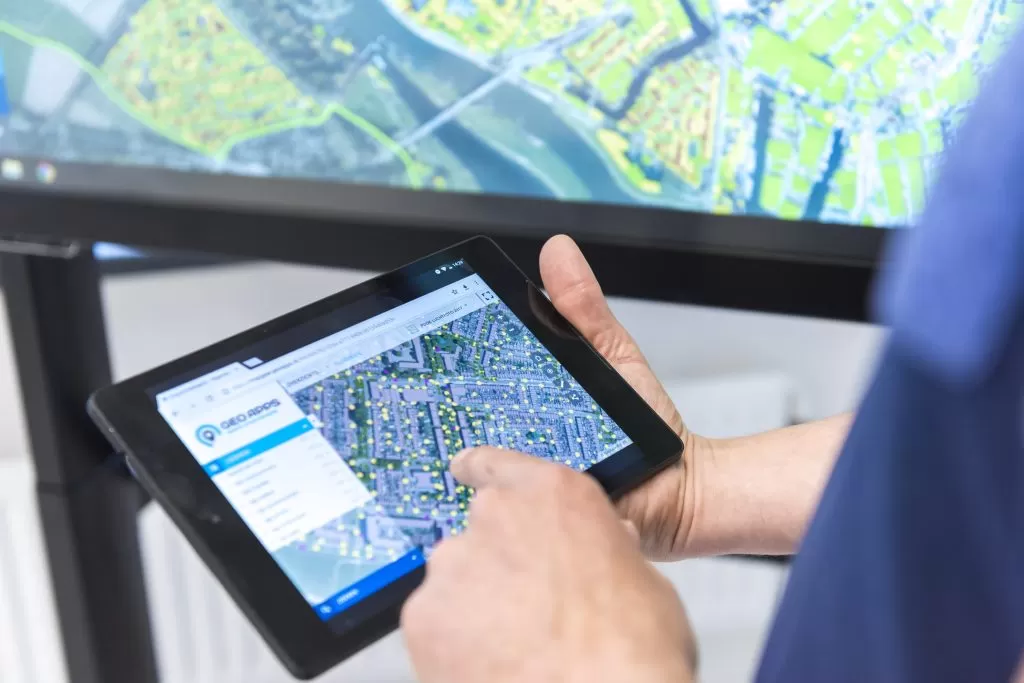
Fully responsive: desktop, tablet, smartphone and TouchTable
Your own branding: logos, colors, icons and themes
3D visualization, oblique imagery and Street View inside the app